On Deryck
Interdependent origination from a new angle

I am re-reading my favorite philosophical autobiography, Bryan Magee’s Confessions of a Philosopher. This book recounts his life as a journey through his relationship with ideas, thinkers, and the perennial questions rather than through events and achievements. The narrative moves between memory and reflection, showing how his ideas were formed through sustained engagement with philosophy. I am currently going through chapter fifteen, titled “Mid-Life Crisis,” which had such a profound effect on me 25 years ago when I too was going through such a crisis. When I read a book, I underline interesting passages and write comments in the margin with a pencil. So, on pages 340 to 347, I read “[Magee] On Chomsky,” “On Mahler,” “On Shakespeare,” “On Wagner.” But suddenly, on p. 348, I read “On Deryck.”
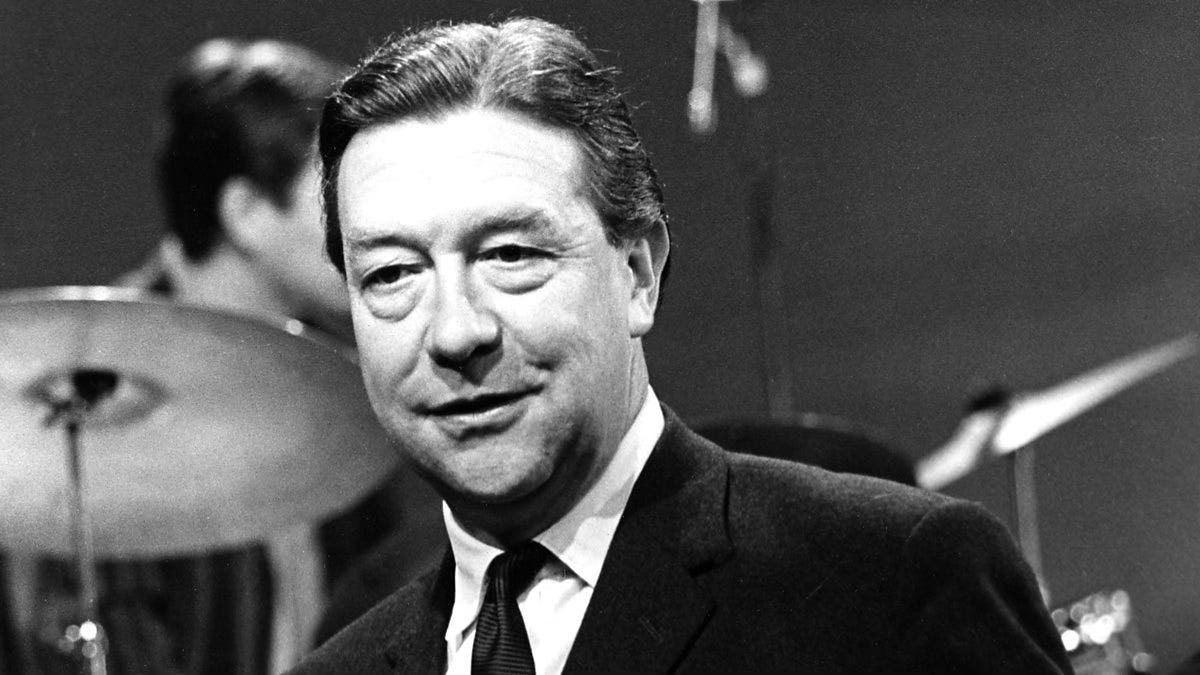
“Deryck? Who’s this guy?” I think. “How did he end up next to all these great men?” Magee devotes a full four pages to the life and work of this person. I reread these pages and remember that Deryck Cooke was a great musicologist who even reconstituted Mahler’s unfinished Tenth Symphony from the composer’s notes after Mahler’s death. He was also a Wagner expert who helped Magee understand the depths of Wagner – his favorite composer. But most importantly, Deryck was Magee’s good friend. And the intensity and love with which Magee describes Deryck’s work and musical understanding is unparalleled in the rest of the book. Magee writes:
Deryck knew Wagner’s scores in the minutest detail, and he carried in the front of his mind a year-by-year – for some periods week-by-week and even day-by-day – biography of Wagner […] I do not believe that Wagner knew his own scores so well, and I doubt that he remembered his own life in such clarity of detail, or with such an assured grasp of chronology. Furthermore, Deryck’s knowledge was astonishingly alive […] he was always doing things with it.
And Magee goes on and on praising his friend …
Then I start thinking: Who is this Deryck, really? Where did he come from and where did he go? He meant something to some people for a few decades, and then passed away at the age of 57, just as he was beginning to write his magnum opus, a book about Wagner’s music. When Magee talks of Kant and Schopenhauer and Popper, his admiration is constrained. For him, these great men with their great achievements are just names associated with works. He admires them as “abstract beings” whose value has become important over centuries. But Deryck was a living being with whom he interacted and had a deep loving friendship. And contrary to the others in the book, his life’s value comes from the work he never finished! The central part of his life was his preoccupation with and deepening of his understanding of Wagner’s music, which he never managed to share with the world because he passed away suddenly. He only shared it with a handful of friends, Magee among them. His life had immense value for this small circle. The meaning and importance of his life was a private one.
I find myself becoming obsessed with this person more than anyone else mentioned in the book. Since Magee has been important in my life, and since Deryck has been important in Magee’s life, now Deryck has subsequently become important in my life too. The Shakespeares, Kants, and Schopenhauers suddenly seem insignificant. Is it possible that this unknown Deryck is as important as all of these great men? Is it possible that his life has more meaning for me, here, today, than the lives of all these other great men put together? And what about Deryck’s quality of life itself? Is it possible that he may have lived more fully than all the great philosophers and artists mentioned in Magee’s book? And if his life was lived in such manner, isn’t this, in itself, something great?
My thoughts wander to new fields of exploration about Greatness and the Interdependence of all humanity: What if Deryck would one day have become as great as one of these great men but simply died before he could achieve it? What if his greatness was already there but unexpressed? Does this make him less great? And what is Greatness anyway? Who measures it? I, Magee, some academics in universities, or our various societies that come and go on this earth – transient and time-bound? The penciled “On Deryck” in the margin now seems to disturb me more than any other margin note I have ever written!
And then it strikes me like an illumination: Deryck is as important as all the others! Kant, Heidegger, Wagner, and all the rest could never have existed for us as great men were it not for all the Derycks who love, understand deeply, and interpret their work. Who would Wagner be if there was no Deryck to listen to his music and confirm, proclaim, shed light on its greatness? My grandmother and all the millions of people who never listen to classical music would never listen to and appreciate Wagner’s music. Furthermore, Wagner had an intense need to be admired and recognized as a genius; he sought not only appreciation for his music but personal veneration for his artistic mission that he had framed as historically transformative. In other words, Wagner composed for people who had Deryck’s ears and depth of understanding. Who would Wagner be if there was no Deryck to listen to him?! We may go as far as claiming that were there no audience with the level of Deryck’s understanding, Wagner may have never composed anything. It is as if Deryck constitutes Kant’s “condition of sensibility” for any Wagner to exist! Just as all human experience is possible, according to Kant, because our mind receives sensations through the a priori forms of space and time that structure all appearance, similarly only an a priori sensibility of Deryck’s level renders Wagner’s music intelligible as Wagner. It is as if Wagner can never be greater, can never contain anything more than what Deryck prescribes to him! In Kant’s philosophy, to prescribe is to lay down the very conditions under which something can appear at all in consciousness. Thus Deryck does not simply attribute qualities to Wagner; he determines the horizon within which Wagner’s greatness can manifest.
We could expand this idea to include all great men: They all depend on “a Deryck” for them to be great. Suddenly, this strange name in the margin becomes monumental in its significance! The Tibetan Buddhist idea of interdependent origination has just obtained flesh and blood. Interdependent origination teaches that nothing exists on its own. Every phenomenon arises through causes and conditions, persists through them, and vanishes when they dissolve. Nothing is truly “self-existent.” Applying it here: Wagner’s “greatness” does not exist as a self-contained property residing inside the music scores, nor solely in Wagner’s own conviction of genius. It arises through a network of conditions: the music, the historical period in which he lived, the listener’s sensibility, the ability of one to understand of the complexity of his operas. Without these conditions converging, “greatness” does not appear. Wagner’s music becomes great only insofar as it is heard, interpreted, and deeply enjoyed by a mind capable of grasping its ambition, structure, and emotional reach. Neither Wagner nor Deryck stands alone. Wagner depends on Deryck for his greatness to be recognized; Deryck depends on Wagner for the musical experiences and writings that make him who he is.
So why should we then claim that Wagner is “greater” than Deryck if the two arise interdependently? I understand that Deryck did not have the talent and compositional abilities of Wagner and he could never have composed a Tristan and Isolde or a Parsifal. But his ability to understand these works at the deepest possible level is another form of greatness. His name therefore may be rightly placed in the margin next to these great men because he too was a great man – albeit not having been known by the masses.
Deryck has just become the symbol of the greatness of every person who can appreciate greatness at its deepest level.
Following this idea to its logical conclusion, we may claim that we all partake of the greatness of all great men to the degree we can relate to their work at a profound level. In this sense, Deryck also represents the heights to which our own understanding may rise. We can always reach the greats through our own hard-earned appreciation of the deepest elements of their work – precisely what they hoped for from us. When we achieve this, we re-create within us the same creative force that engendered the great work in the first place. We commune, that is, from the very same cup of creation – a cup that requires both a creator and a beholder. Creation is not something one side possesses; neither side can exist without the other, and greatness interdependently arises only in the shared act.
When we grasp this interdependence, we realize that each of us is quietly summoned into the creative act and subsequently into Greatness itself. For it is through our own depth of understanding and appreciation that the great work is completed. And in that act of completion, a measure of its greatness is reborn within us.
For more Tuesday Letters on Substack, click here.
For more content, visit nicoshadjicostis.com.
Enjoying my Tuesday Letters? Check out my books, available at Amazon.com and your local bookstore by special order.

If you are not already a subscriber and you liked this essay, you may subscribe below to receive the bi-weekly Tuesday Letter.